


LET THE LIGHT OF CHRIST SHINE IN YOUR LIFE!

Fourth Sunday of Lent
"As Jesus passed by, he saw a man blind from birth. His disciple asked him, “Rabbi, who sinned, this man or his parents, that he was born blind?”(John 9:1-41)
In the Gospel reading, Jesus encounters a man who has been blind from birth. (John 9:1) The disciples question Jesus about who sinned. The man? His parents? Jesus responds that the man was born blind so that God’s work may be revealed in him, telling his disciples that “I am the light of the world” (John 9:5).
Ironically, the man does not approach Jesus; he does not ask Jesus to give him sight. Is it because he is blind? However, Jesus perceives his condition, spits on the ground, and makes a mud bath from salvia and clay, and smears it on the man’s eyes. Jesus sends the man to “go wash in the pool of Siloam.” The man returns able to see. (John 9:7)
The noisy neighbors in the village questioned him, asking, "How was he able to see?" The healed man says, a “a man called Jesus” made clay, anointed my eyes, and told me to go wash” (John 9:11). Now I can see.
Still unbelieving, the villagers take the man to the Pharisees, where he is questioned once again about his ability to see. The Pharisees declared that Jesus must not be “a man from God” because he had healed this man on the sabbath. (John 9:14)
The man recounts his story once more to the Pharisees, causing them to ask, “What do you have to say about him, since he opened your eyes?” The healed man says, “He is a prophet.” (John 9:17)
They still did not believe him and kicked him out of the synagogue. (John 9:18)
Hearing that the man had been thrown out by the Pharisees, Jesus found him and asked, “Do you believe in the Son of Man?” (John 9:38). The healed man asks, “who is he, that I might believe?” (John 9:37). Jesus says, “the one who is speaking to you is He.” The man answers, “I do believe, Lord” (John 9:35).
Throughout the story, Jesus remains at the very heart - before, during, and after - healing of the man born blind. The healed man’s physical healing parallels his growing spiritual insight. He first identified Jesus as a man, then a prophet, and then Lord.
How is it that the man born blind can see, when those who have full eyesight were spiritually blind?
At different times in our lives, we all experience spiritual blind spots. Spiritual blindness is rarely the inability to see what is in front of us; it is the more subtle failure to let what we see really matter.
The man born blind, sitting at the edge of the road, was present, familiar, and passed by daily - yet no one truly sees him until Jesus stops. The disciples see only a theological problem to solve, a question of whose sin produced his suffering. He is looked at but not seen.
Jesus’ act of healing the man born blind reveals the presence of God’s kingdom in a broken world. This miracle demonstrates God’s sovereignty over illness and His compassion towards those who suffer.
Lent invites an honest reckoning with the blind spots we carry — not only toward others, but within ourselves and our communities. To truly see, in the way Christ stopped and saw, requires more than open eyes. It requires the willingness to be changed by what we encounter.
One of the most beloved hymns, “Amazing Grace,” beautifully expresses this reality:
Amazing grace, how sweet the sound that saves a wretch like me;
I once was lost, but now I am found; Was blind, but now I see.
Where are your blind spots today? Christ will give you light!
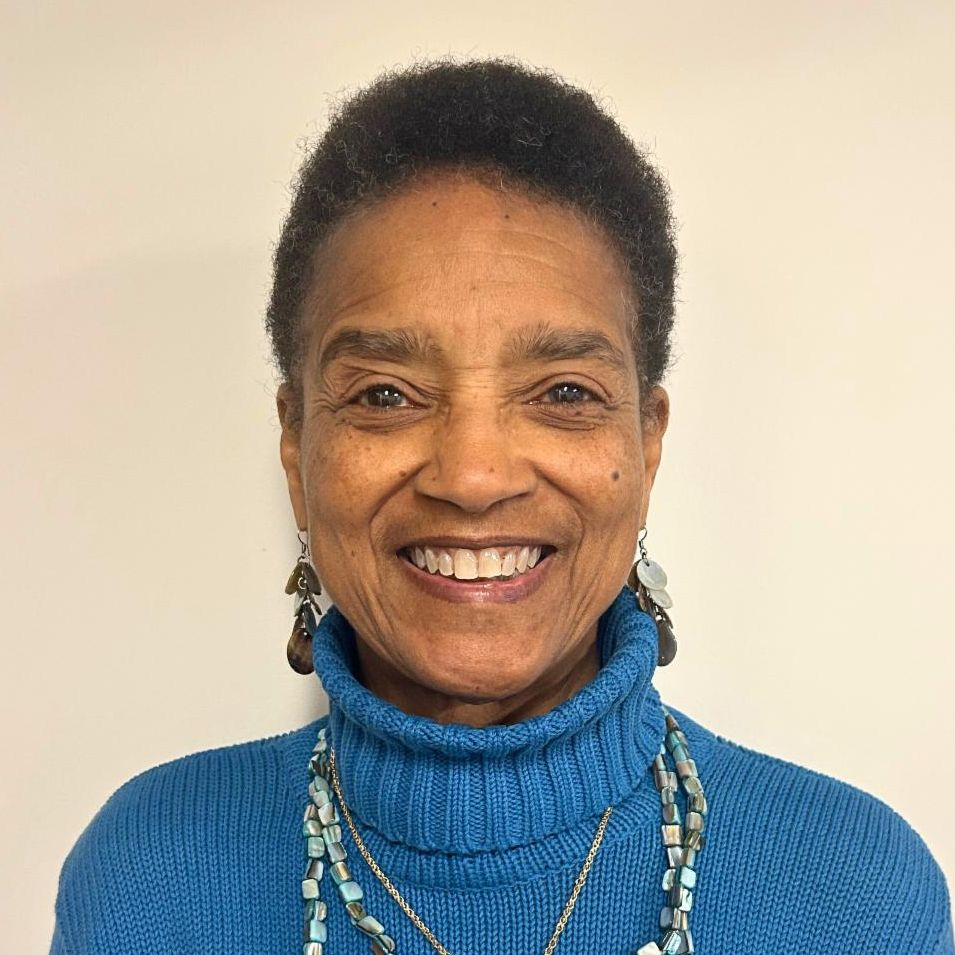
Author: Cynthia is a member of St. Augustine Catholic Church. She currently serves as a lector and Extraordinary Minister of Holy Communion at her parish and the National Shrine of the Immaculate Conception.
Her dedication extends to numerous roles within parish and school ministries, including serving as Prefect for the Sodality and as a third-grade CCD teacher. She represented her parish as a delegate to the archdiocesan-wide synod. In 2021, she received the parish's community "Vincent Brooks Service Award" for her outstanding leadership in both the parish and the wider community.
In 2001, Cynthia was the co-founder of “Sisters in the Spirit." This ministry is dedicated to empowering women, motivating intergenerational Black women to use their talents to serve in the Catholic Church and society.
A member of Sister Thea Bowman 364, Knights of Peter Claver Ladies Auxiliary, where she recently held the position of Grand Lady. She is also the past Faithful Navigator for the Sister Mary Antona Ebo 47 Meritorious Fourth Degree Ladies of Grace. Over the course of 16 years.
Cynthia worked for the U.S. Conference of Catholic Bishops, contributing to various offices including Justice, Peace and Human Development, Secretariat for African American Catholics, and the General Secretariat. In addition, she spent five years at Catholic Charities, Archdiocese of Washington.
In 2024, Cynthia retired from her role as a federal contractor with the Federal Aviation Administration. She continues her service by participating on several boards and currently serves as Treasurer for the Center for Applied Research (CARA). Cynthia is also an associate member of the National Black Sisters Conference and co-chair of the National Black Catholic Women’s Gathering. Additionally, she volunteers at the National Museum of African American History and Culture. Cynthia is presently focused on educating, promoting, and Sr. Dr.Thea Bowmen's cause for Sainthood.


Comments